
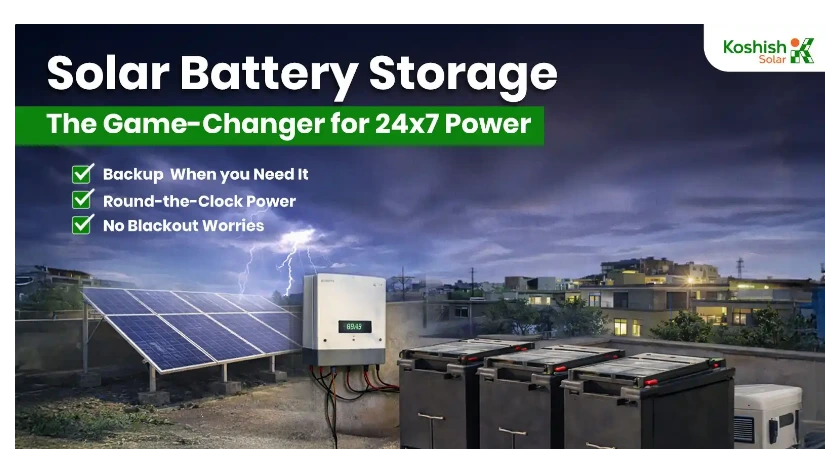
As solar panels grows across residential, commercial, and industrial sectors, solar battery storage has become an important component of modern energy systems. While solar panels generate clean electricity during the day, energy storage ensures that this power is available even when the sun is not shining. Power backup is important for complete energy independence, solar batteries are transforming how we use renewable energy in an effective way.
This blog explains the basics, types, benefits, and economics of solar battery storage, helping you make an informed decision.
Basics of Solar Battery Storage
Solar battery storage refers to appliances and ways of storing the excess electricity generated by solar panels for later use. Instead of exporting surplus power to the grid or letting it go unused, batteries retain this energy and supply it during nighttime, cloudy days, or power outages.
For homes and businesses, solar energy backup ensures uninterrupted electricity during grid failures. In areas with unreliable power supply, solar batteries act as a dependable alternative, reducing dependency on diesel generators.
A well-designed solar battery system also plays a vital role in off-grid storage solutions, where there is no access to utility electricity. These systems allow users to operate independently while maintaining stable power availability.
Types of Batteries for Solar
Choosing the right battery technology with quality is essential for performance, safety, and long-term value. The most common battery types used in solar battery storage include:
Lithium-Ion Batteries: Lithium-ion batteries are the most popular option due to their high efficiency, compact size, and longer battery lifespan. They require minimal maintenance and are widely used in residential and commercial solar installations.
Lead-Acid Batteries: These traditional batteries have a lower upfront solar battery cost, making them suitable for budget-sensitive projects. However, they have shorter battery lifespans and require regular maintenance, which increases long-term costs.
Flow Batteries: Flow batteries are emerging as reliable off-grid storage solutions for large-scale applications. They offer excellent depth of discharge and extended battery lifespan, though their initial solar battery cost is higher.
Each battery type impacts your solar energy backup capability differently, so selection should be based on usage patterns, space availability, and long-term energy goals.
Benefits of Energy Storage
Installing solar battery storage offers multiple financial, operational, and environmental benefits:
Reliable Power Backup: One of the key advantages of solar batteries is their ability to provide consistent power during outages. There are no power outages without interruption.
Reduced Grid Dependence: By storing solar power, users rely less on utility electricity, making off-grid storage solutions practical for rural, remote, and industrial locations.
Energy Cost Savings: Stored energy can be used during peak tariff hours, reducing electricity bills. Over time, the savings can offset the initial cost of the solar battery.
Improved Solar Utilization: Instead of wasting excess generation, solar battery storage maximizes solar consumption and enhances return on investment.
Sustainability and Carbon Reduction: Energy storage supports cleaner energy use, reducing dependence on fossil fuels and lowering carbon emissions.
Solar Panels Cost and Lifespan
Understanding solar battery cost and battery lifespan is crucial before investing.
Solar Battery Cost
The cost of a solar battery depends on the battery type, storage capacity, brand, and installation requirements. Lithium-ion batteries typically have a higher upfront cost, but their efficiency and durability make them cost-effective over time. Lead-acid systems may appear cheaper initially, but incur higher replacement and maintenance expenses.
Battery Lifespan
Battery lifespan is measured in years or charge cycles. Lithium-ion batteries typically last 8–15 years, while lead-acid batteries may last 3–5 years under regular use. A longer battery lifespan reduces replacement frequency, improving overall project economics.
When evaluating off-grid storage solutions, lifespan becomes even more critical since system reliability directly affects daily operations.
Role of Solar Batteries in Off-Grid Systems
The remote locations, such as farms, industrial plants, and telecom towers, off-grid storage solutions are essential. The Solar systems work wonders, as they rely entirely on solar generation and battery storage to meet energy demand.
Off-grid setups combine panels, batteries, and inverters to deliver uninterrupted power without grid dependency. A high-quality solar energy backup system ensures operational continuity, especially in areas without utility infrastructure.
Wrapping Up
Solar battery storage is no longer an optional add-on, it is a strategic investment for energy reliability, savings, and sustainability. Whether you are looking for dependable solar energy backup, cost control, or long-term independence through off-grid storage solutions, solar batteries provide a future-ready solution.
While solar battery costs and lifespans vary across technologies, selecting the right system based on usage and goals ensures maximum value. As energy demands rise and grid uncertainty increases, solar battery systems are set to play a defining role in the renewable energy transition.