
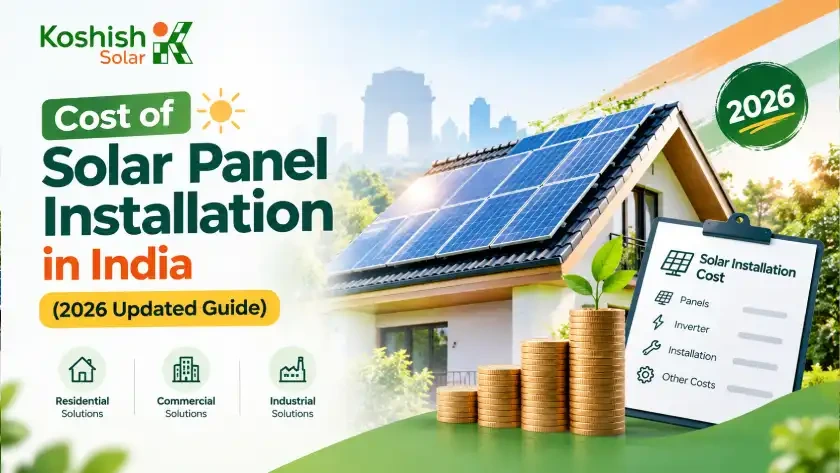
If you are planning to install a solar system, one question that comes to mind is the solar panel price in India. Basically, the solar installation cost in India depends on several factors such as system size, location, mounting structure, and electric item loads.
However, Pm Surya Ghar Muft Bijli Yojana makes solar installation affordable, and it helps in reducing the cost of the solar system by up to 30-40%. In this guide, you will get complete information on solar installation cost in India, solar panel subsidy in India, and how to choose the best solar system for your space.
Overview of Solar Panel Price in India
The Solar panel price in India is decided on multiple factors, such as system size, electric equipment loads, mounting structure, and location.
For example, a 3kW solar system price in India is approximately in the range between 2 lakhs to 2.5 lakhs. However, by taking advantage of the solar panel subsidy in India, it can be affordable for you.
However, the solar panel cost also depends on the solar installer, such as what kind of product they use for setting up a solar system.
Which Factors Affect the Solar Panel Price in India?
There are some factors that affect the solar panel price in India, such as the required system size, solar panel types, and electronic appliance loads.
Solar Panel Types: The solar panel price in India is affected by the solar panel types. There are three solar panel types available in the market that are Monocrystalline, Polycrystalline, and Bifacial Panels.
System Size: The solar panel cost also depends on system size. For example, if you install a 3 kW solar system, the cost will come around 1.95 lakhs to 2 lakhs. The 5 kW solar system costs approximately 2.86 Lakhs to 3 Lakhs.
Solar Inverter: A solar inverter may increase the complete solar installation cost in India. Solar inverters play an important role in solar energy as it supplies stored energy at night or when the grid is unavailable.
System Type: The solar installation cost in India depends on system type, such as on-grid, off-grid, and hybrid solar systems. An on-grid solar system is more affordable than a hybrid or off-grid solar system.
PM Surya Ghar Yojana Subsidy: You can make your solar panel system affordable by getting the solar subsidy of PM Surya Ghar Yojana. It reduces the cost by approximately 30-40%.
Benefits of Installing a Residential Solar System
There are multiple benefits of installing a residential solar system, such as a reduced carbon footprint, enhanced property value, cost savings, easy maintenance, and more.
Protect the Environment: Solar systems produce clean energy directly from the sun. It does not produce carbon emissions while producing solar energy.
Independent Energy: It reduces your dependency on the local grid and provides reliable energy.
Low Maintenance: The solar panel system does not require heavy maintenance. It generally requires 2-3 times a year.
Enhanced Property Value: Nowadays, buyers are looking for sustainable homes and are ready to pay a higher property value.
Get a Solar Panel Subsidy in India: For residential solar panel installation, you can apply for a solar panel subsidy in India. The amount of subsidy depends on your system size and location.
Why Choose Koshish Solar for Solar Panel Installation?
We have more than 10 years of experience in solar solutions. We provide renewable energy solutions across various sectors, such as Residential, Commercial, and Industrial. From system design to paperwork approval, we manage everything, which makes solar installation smooth.
We use tier-1 equipment, which ensures long-term performance and best results. We offer all kinds of solar types, whether on-grid, off-grid, or hybrid solar systems.
Wrapping Up
The cost of solar panels in India has dropped significantly in 2026, through the Pradhan Mantri Surya Ghar Yojana.
By claiming the solar subsidy, you can recover your costs within 4-5 years and enjoy free electricity for up to 25 years. It provides reliable energy that can easily manage your daily energy needs.
It is important to connect with a well-reputed solar installer for installing a solar system at your home or business.